
Harvest King: Farm TD Strategy
HomaPuzzle
4.4442.00 Reviews
- Version
- 15.0
- Installs
- 1.00M
- Age Rating
- Everyone 10+
Screenshots
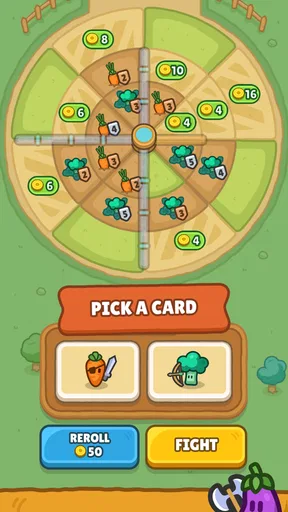
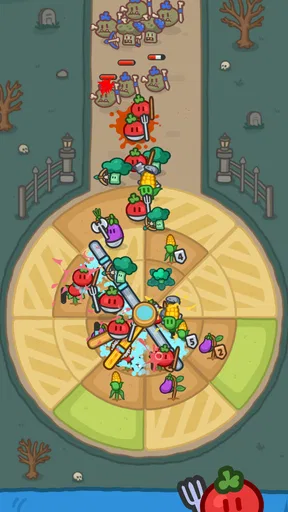
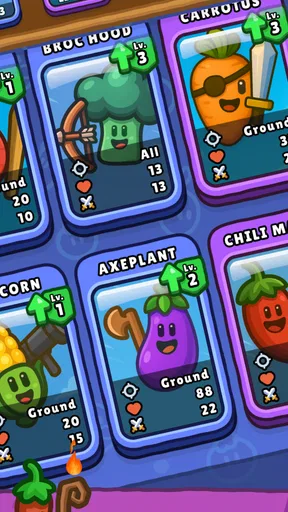
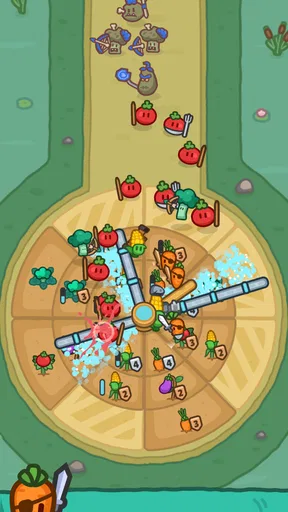
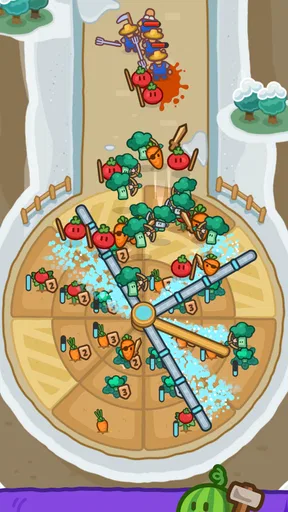
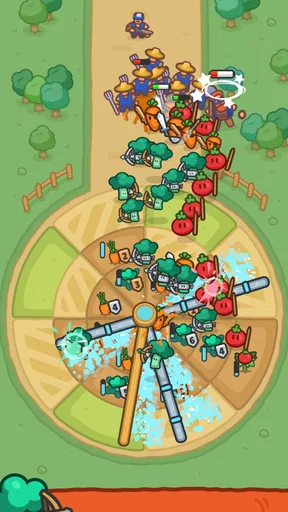
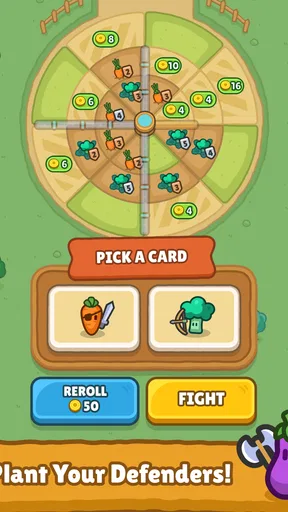
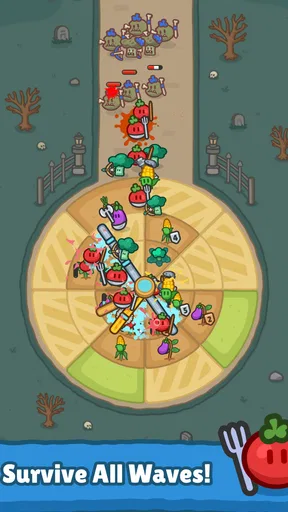
Our Review of Harvest King: Farm TD Strategy
 Analysis by Appyee
I approached Harvest King: Farm TD Strategy expecting a light farming puzzle, but its real identity is closer to a compact tower defense game built around merging vegetables. That central idea matters because it changes how I think about every harvest: I am not simply collecting produce, I am preparing a defense against incoming enemy waves. The result is a game that feels easy to start, yet asks for more attention than its cheerful farm theme first suggests.
Developed by Homa, this free puzzle game places its strongest emphasis on the relationship between merging and survival. The vegetable theme gives the board a friendly look, while the tower defense structure supplies the pressure. I found that contrast appealing during short sessions, especially when I wanted something more active than a traditional merge game but less demanding than a full strategy title.
The game is available for Everyone 10+, and it has attracted more than a million installs with an average rating of 4.4 from roughly sixteen thousand ratings. Those figures suggest that its simple premise has broad appeal, but they do not remove the need to understand its rhythm. The most enjoyable sessions came when I treated each merge as a defensive decision rather than an automatic upgrade.
Why the merge-and-defense capability is the heart of the game
The key capability is the ability to merge powerful vegetables while dealing with enemy waves. In practice, that means the board is both an upgrade space and a battlefield. A merge can improve the strength of what I have available, but using space for one combination can also affect what I am able to build next. This gives the puzzle layer a clear purpose: it is there to shape the defense, not merely to fill time between attacks.
That distinction separates this game from a standard match-style puzzle. In a conventional puzzle, I usually focus on creating the best immediate combination or clearing a difficult arrangement. Here, I have to consider whether a merge helps me handle the next threat. A smaller improvement at the right moment can be more valuable than waiting for a larger combination while the defense remains weak.
I also found the merging mechanic easier to appreciate when I stopped chasing the biggest possible vegetable. Bigger is naturally attractive, but the board can become awkward if every decision is made with only the next upgrade in mind. The useful question is often, “What arrangement leaves me with the most practical defense?” That change in perspective is where the game starts to feel like strategy instead of a simple progression loop.
The important lesson is that merging is not just an upgrade button; it is a way of managing defensive space under pressure. Players who notice that early will probably get more from the game than players who merge as quickly as possible without watching the wave situation.
How the system feels during an ordinary session
My usual approach was to begin by looking at the available vegetables and the immediate defensive situation before making a quick combination. Early moves feel approachable, so the game is suitable for a short break or a few minutes of relaxed play. As the pressure builds, however, the board begins to reward planning. I had to think about which pieces were worth preserving and which ones were blocking a more useful arrangement.
The idle tower defense element is important here. The game is not asking me to control every moment like a fast action defense title. Instead, I make decisions that influence how the defense performs while the waves continue. That makes it comfortable for players who enjoy seeing a plan develop, but it may feel less satisfying to anyone who wants constant direct control over targeting, movement, or individual attacks.
One practical habit helped me avoid wasteful decisions: I tried to keep a little flexibility on the board instead of combining every possible pair immediately. Open space is valuable because it gives the next merge room to happen. Filling the board with upgrades can look efficient, but it can also leave me with no convenient way to respond when the next useful pieces appear.
Another useful habit is to separate urgent decisions from attractive ones. An impressive merge can be tempting, but if the current defense is already handling the wave, I may gain more by preparing the next sequence. Conversely, when enemies are becoming a problem, saving pieces for a perfect combination can be too slow. The game works best when I balance future potential against immediate survival.
What makes the puzzle layer more strategic than it first appears
The trade-off between strength and flexibility is the most interesting part of the design. A merged vegetable may be stronger, but it can also reduce the number of smaller pieces available for future combinations. I therefore learned to judge an upgrade by its timing, not only by its apparent power. This is a small but meaningful strategic layer that the bright presentation does not advertise clearly.
Board space is another hidden source of difficulty. When I had room to maneuver, the merge system felt generous. When the arrangement became crowded, every misplaced decision became more expensive. This means that a player can improve simply by becoming more deliberate with placement and timing, even without changing their overall style. I would recommend treating empty space as a resource rather than as unused potential.
The game also suits a “checkpoint” mindset. Instead of trying to solve the entire run in advance, I found it more practical to ask what the next wave requires, make a controlled improvement, and then reassess. That keeps the decisions manageable and prevents the puzzle from becoming a long chain of guesses. It is especially helpful for new players who might otherwise spend too much time searching for an ideal merge.
Because the game is free, it is easy to try without committing money at the beginning. In-app purchases range from $0.99 to $99.99 per item, so players who prefer completely unrestricted free play should pay attention to how they feel about optional spending before becoming invested. I did not view purchases as the reason to play; the core appeal is the decision-making loop. Still, anyone sensitive to mobile monetization should approach the game with a firm personal limit.
The best everyday scenario for playing
I think the strongest use case is a short waiting period when I want something that can be understood immediately but still gives me a decision to make. For example, during a commute break or while waiting for an appointment, I can open the game, make a few merges, watch the defense develop, and stop without needing to remember a complicated story or a large control scheme.
It also works for players who like idle games but want more involvement than simply collecting rewards. The defense continues to provide context for the upgrades, so I am not just checking numbers rise. At the same time, it is less demanding than a traditional tower defense game that expects constant placement, rapid reactions, or detailed map management.
For a family setting, the Everyone 10+ rating makes it more approachable than many combat-focused strategy games, although parents should still consider whether the purchase model suits their household. The farm presentation is softer than the subject of enemy waves might suggest, which helps the game feel accessible without removing the basic tension of defending against attacks.
I would not choose it when I want a deep, long-form strategy experience. Someone looking for complex maps, extensive unit customization, competitive planning, or a campaign built around a strong narrative may find the format too compact. A classic tower defense game is likely a better choice for that player. Likewise, a pure merge game may be preferable if the goal is calm organization without wave pressure.
Where the trade-offs become noticeable
The same simplicity that makes the game approachable can limit its appeal over longer sessions. The central loop is clear, but players who need constant novelty may eventually want more variety than merging vegetables against waves can provide. I enjoyed the focus, yet I also noticed that the experience depends heavily on whether this particular combination of puzzle and defense matches my mood.
There is also a difference between strategic tension and repetition. When I made thoughtful choices and saw them help with a difficult wave, the game felt rewarding. When I repeated similar merges without needing to reconsider my plan, it felt more like routine progression. That is not necessarily a flaw, but it means the game is better for intermittent play than for marathon sessions.
The idle structure creates another trade-off. It reduces the need for constant input, which is convenient, but it also means I cannot always solve a problem through quick manual skill. If my defense is underpowered, the answer is usually to improve the underlying arrangement rather than to react faster. Players who enjoy direct control may read this as a lack of intensity, while players who prefer planning will probably see it as a strength.
I also recommend resisting the urge to spend simply because a wave feels inconvenient. The most useful improvement is often a better decision about space and timing, not an immediate purchase. Since individual in-app items can reach $99.99, setting a budget before playing is sensible. The free entry point is inviting, but responsible spending is important if the game becomes part of a regular routine.
Who gains the most from Harvest King
The best audience is someone who enjoys light strategy, merge puzzles, and gradual defense building in the same package. I would especially recommend it to players who like making small decisions that accumulate into a stronger position. It is also a good fit for people who prefer games that can be played in brief sessions without requiring a large amount of setup.
Newcomers to tower defense may appreciate the gentler introduction because the merge system gives them a familiar visual task while the waves add a reason to plan. Experienced tower defense players may enjoy it as a simpler side game, although they should not expect the depth of a more traditional title. The game’s appeal comes from combining two accessible ideas, not from trying to replace the most detailed games in either category.
Players who should skip it are those who dislike waiting for an automated defense to resolve, dislike merge-based progression, or want precise control over every unit. It is also not my first recommendation for anyone who wants a purely relaxing puzzle with no pressure. The enemy waves give the merges meaning, but they also make mistakes feel more consequential.
The current version is 15.0, and the game runs on Android 7.1 or later. That makes it a practical option for people using older compatible devices, though the experience will still depend on the phone itself and personal tolerance for mobile game interruptions. I would check that the device meets the minimum system requirement before deciding whether it is suitable for an older handset.
My practical advice before committing to it
Give the game a few sessions rather than judging it from the first few minutes. The opening is intentionally easy to understand, while the more interesting decisions appear when space, timing, and wave pressure begin competing with one another. During those sessions, notice whether you enjoy planning around the next threat or whether you find the automated defense too passive.
Keep your early board flexible, avoid merging purely for visual progress, and look at the defensive situation before choosing the most obvious combination. Those three habits make the central mechanic clearer and reduce the feeling that success depends on blindly waiting for the right pieces. They also reveal whether the game’s strategic scale is enough for you.
My final view is positive but specific: this is a good small-scale puzzle defense game, not a replacement for a deep tower defense campaign or a completely peaceful merge title. Homa has built its appeal around one clear capability, and that capability works because every merge can affect both progress and survival. If that kind of compact decision-making sounds enjoyable, the free entry makes it worth trying. If you need extensive control, elaborate systems, or nonstop action, I would look elsewhere.
After spending time with it, I see Harvest King: Farm TD Strategy as a game for thoughtful short sessions. Its strongest moments come when I preserve space, resist an attractive but poorly timed merge, and watch a modest plan hold against the next wave. That is a satisfying loop in its own right, and it gives the farm theme a useful strategic purpose instead of leaving it as decoration.
Verdict
Strengths of Harvest King: Farm TD Strategy
- Simple tower-defense mechanics are easy to learn on a phone.
- Farming and defense elements create a distinctive gameplay mix.
- Short sessions fit well into quick breaks or commutes.
- Strategic placement gives each wave a satisfying planning element.
- Colorful visuals make the game approachable for casual players.
Limitations of Harvest King: Farm TD Strategy
- Progress may feel repetitive after extended play sessions.
- Later stages can become difficult without upgrading defenses regularly.
- The interface may feel crowded on smaller phone screens.
- Resource management can limit experimentation with different strategies.
- Players may encounter ads or optional purchases during progression.
Other Releases by Homa
View All
Attack Hole - Black Hole Games
Arcade4.2

Agent Hunt – Hitman Shooter
Action4.5

Merge Master: Dinosaur Monster
Arcade4.2

Farm Land - Farming life game
Adventure4.5
Similar Picks in This Category
View All
Block Blast!
HungryStudio4.8

Braindom: Brain Games Test
Lahana Game Studio4.6

AMAZE!
CrazyLabs LTD4.6

Sudoku - Classic Sudoku Puzzle
Oakever Games4.7

Art Puzzle - Puzzle Games
Easybrain4.8

Amaze GO!
Oakever Games4.9
Frequently Asked Questions
What is Harvest King: Farm TD Strategy about?
Harvest King: Farm TD Strategy combines farming management with tower defense gameplay. You develop and expand a farm, collect resources, improve production, and defend your land against incoming threats. Instead of focusing only on crops or only on combat, the game asks you to balance both systems, making decisions about upgrades, defenses, and resource use during each stage.
Is Harvest King: Farm TD Strategy free to download and play?
The game can generally be downloaded for free, but players should check the store listing for the current availability and purchase terms. Like many mobile strategy games, it may include optional in-app purchases for resources, boosts, or progression benefits. You can usually begin playing without paying, although advancing faster or unlocking certain conveniences may require spending money.
Does the game require an internet connection?
An internet connection may be needed for features such as advertisements, cloud synchronization, events, updates, or purchases. Some basic gameplay could be available offline, but this can vary by version and device. Before relying on offline access, it is best to test the game after disabling Wi-Fi and mobile data, especially if you plan to play while traveling.
Is Harvest King: Farm TD Strategy suitable for beginners?
The game is approachable for newcomers because its farming and tower defense mechanics are introduced progressively. However, later stages require more careful planning, since upgrading every building or defensive unit at once can quickly consume valuable resources. New players should concentrate on improving a balanced selection of production facilities and defenses rather than spending everything on a single upgrade path.
Are there ads or in-app purchases in Harvest King: Farm TD Strategy?
Players should expect that the game may contain advertising and optional in-app purchases, depending on the platform and current version. Advertisements can sometimes provide rewards, while purchases may offer currency, boosters, or other progression advantages. If you prefer a completely uninterrupted experience, review the store description and payment settings before downloading, and use parental controls when appropriate.
Play our best games!


